
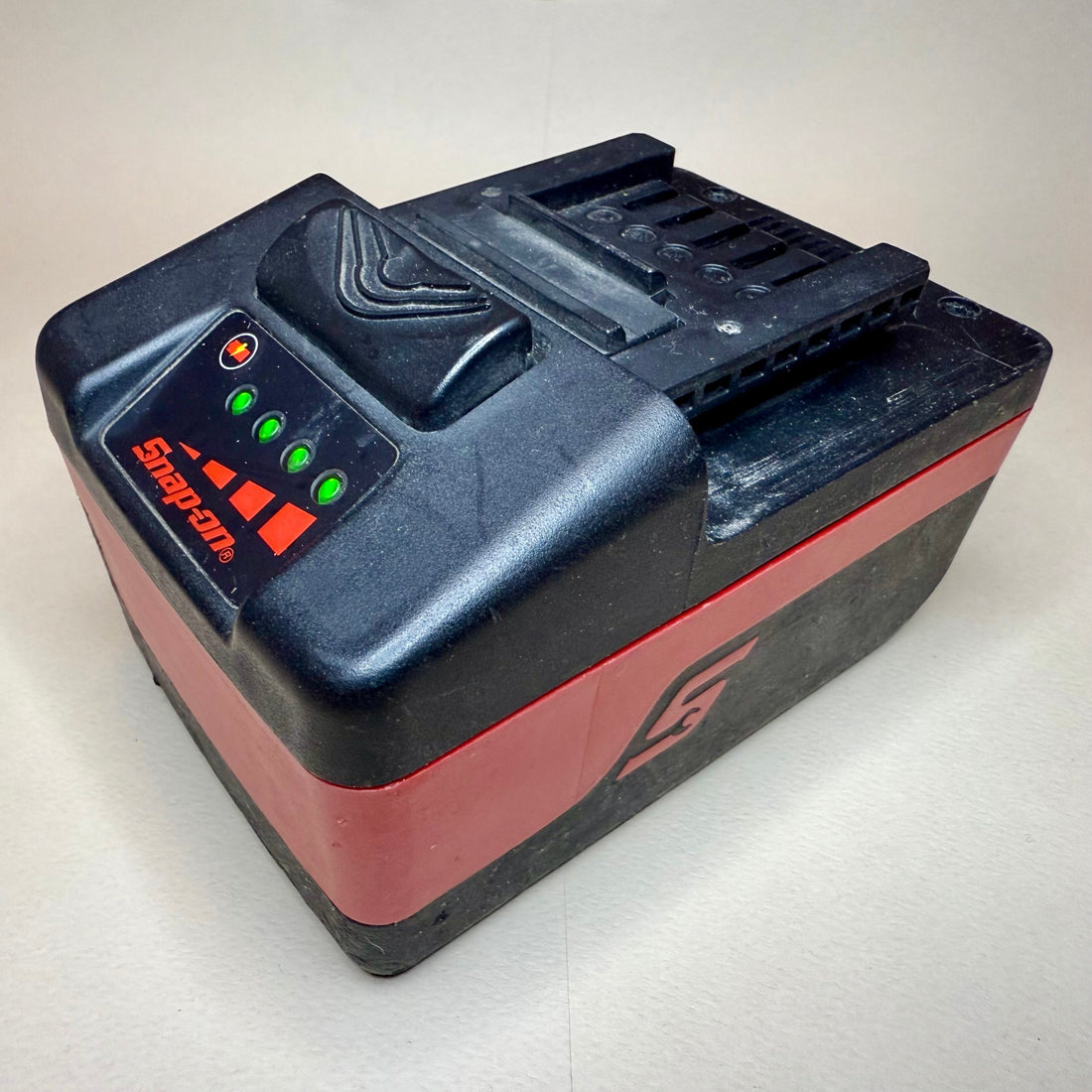
Why Rebuilding Tool Batteries Is Smarter Than Buying New
Your power tool battery died. Should you toss it? Not so fast.
If your Snap-on, Makita, or DeWalt battery pack won’t charge or hold power, chances are the cells inside are just worn out. The shell, terminal block, fuel gauge and protection board routinely outlive the cells by years — which is the whole case for rebuilding. Instead of replacing the entire pack for $100+, you can rebuild it for a fraction of that, with better cells than the ones that came out.
What a rebuild actually involves
A rebuild kit gives you the protection board, housing, nickel and hardware as a matched set. You supply the cells and a spot welder. Most 18V packs use the same 5S2P layout — ten 18650 cells, five groups of two — so the job is much the same across brands.
- Open the old pack and confirm the cells are the fault, not the electronics
- Test each group with a multimeter — one group well below the rest is the classic signature
- Fit fresh, matched, high-drain cells into the kit housing
- Spot weld pure nickel to the 5S2P layout — never solder directly to a cell
- Wire the BMS, verify the voltage ladder, then charge and load-test
Our DeWalt DCB205 guide walks the whole process end to end, and the Snap-on 18V guide covers the same layout on a different platform.
Rebuild kits we stock

We also stock 5S2P kits for Milwaukee M18, Ryobi 18V, RIDGID 18V, Bosch-Style 18V and Makita 18V LXT — or browse the full rebuild kit range.
The cells and parts to finish it


You get longer run time, more power, and a second life for your existing tools — for a fraction of the price of a new pack, and without another dead battery going to landfill.


